Their bodies catch light beautifully, making them a favorite for high-contrast photography. 2. Best Uses for High-Res Jellyfish Images
Tiny, vibrant purple or blue tips on their tentacles.
At 1920px width, these images provide a "Zen" aesthetic. The dark ocean background helps reduce eye strain.
If you are using these images for a project, look for "Creative Commons" or "Public Domain" versions on sites like or Pixabay . This ensures you can use the beauty of the jellyfish without worrying about copyright.
Unlike many jellyfish that drift aimlessly, these are found in the Mediterranean Sea and actually have a bit of their own propulsion. They are also known for "hosting" small fish who hide among their tentacles for protection—something to look for next time you see a high-res shot! 4. Pro-Tip for Creators
They are excellent references for practicing transparency, subsurface scattering (how light passes through objects), and organic movement. 3. Fun Fact: The "Mediterranean Beauty"
Designers often sample these images for natural color schemes—pairing deep navy blues with "egg-yolk" oranges and royal purples.
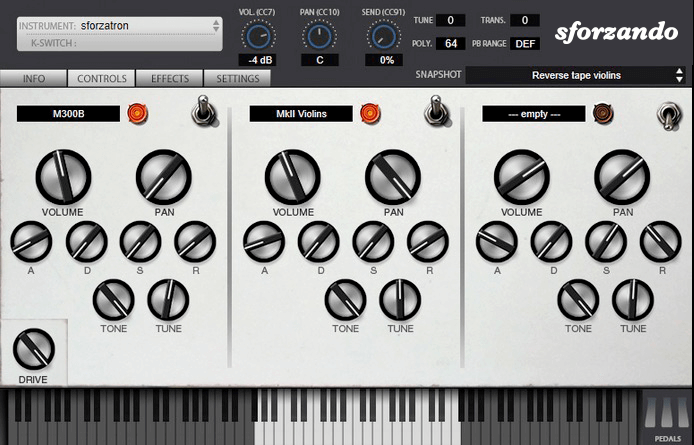
The SFZ Format is widely accepted as the open standard to define the behavior of a musical instrument from a bare set of sound recordings. Being a royalty-free format, any developer can create, use and distribute SFZ files and players for either free or commercial purposes. So when looking for flexibility and portability, SFZ is the obvious choice. That’s why it’s the default instrument file format used in the ARIA Engine.
OEM developers and sample providers are offering a range of commercial and free sound banks dedicated to sforzando. Go check them out! And watch that space often, there’s always more to come! You are a developer and want to make a product for sforzando? Contact us!
You can also drop SF2, DLS and acidized WAV files directly on the interface, and they will automatically get converted to SFZ 2.0, which you can then edit and tweak to your liking!
Download for freeInstrument BanksSupport
Their bodies catch light beautifully, making them a favorite for high-contrast photography. 2. Best Uses for High-Res Jellyfish Images
Tiny, vibrant purple or blue tips on their tentacles. ШЄШЩ…ЩЉЩ„ jellyfish gabb0951bc 1920 jpg
At 1920px width, these images provide a "Zen" aesthetic. The dark ocean background helps reduce eye strain. Their bodies catch light beautifully, making them a
If you are using these images for a project, look for "Creative Commons" or "Public Domain" versions on sites like or Pixabay . This ensures you can use the beauty of the jellyfish without worrying about copyright. At 1920px width, these images provide a "Zen" aesthetic
Unlike many jellyfish that drift aimlessly, these are found in the Mediterranean Sea and actually have a bit of their own propulsion. They are also known for "hosting" small fish who hide among their tentacles for protection—something to look for next time you see a high-res shot! 4. Pro-Tip for Creators
They are excellent references for practicing transparency, subsurface scattering (how light passes through objects), and organic movement. 3. Fun Fact: The "Mediterranean Beauty"
Designers often sample these images for natural color schemes—pairing deep navy blues with "egg-yolk" oranges and royal purples.